
Is SEO Really Dead Because of AI? Here's What's Actually Happening
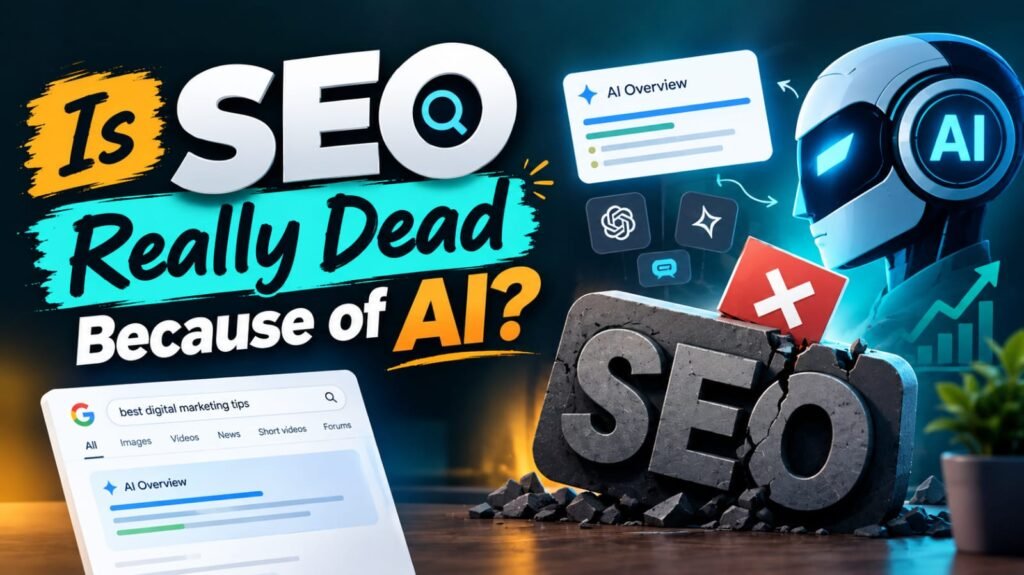
Every few months, someone declares SEO dead. First it was social media that was supposedly going to kill it, then it was AI chatbots, and now it’s AI-generated search summaries taking over the results page. If you’ve been running a business website in Kerala for any length of time, you’ve probably heard this claim at least three times by now, usually from someone trying to sell you a different service entirely.
Here’s the honest answer: SEO isn’t dead. It’s just not the same SEO your neighbor’s cousin learned from a course five years ago. Let’s talk about what’s actually going on.
Why People Think SEO Is Dying
The fear comes from a real place. When you search something on Google today, you often get an AI-generated summary right at the top of the page, answering your question before you even click a single link. For a business owner in Kozhikode who’s spent years building up rankings, that’s genuinely worrying. If people get their answer without clicking through, where does that leave your website?
But here’s what’s missed in that panic — people still click through. AI summaries are good for quick factual answers, but the moment someone wants to actually book a homestay, buy a product, compare prices, or read real reviews, they’re clicking into actual websites. The clicks haven’t disappeared. They’ve just shifted toward who ranks well for the searches that actually lead to a sale.
What's Genuinely Changed
Search itself has gotten a lot smarter about understanding what people actually mean, not just matching the exact words they typed. A few years back, if someone searched “ayurvedic treatment centre near me,” ranking well meant stuffing that exact phrase into your page title, headers, and body text as many times as you could get away with. That trick is dead, no doubt about it.
What’s replaced it is search engines trying to understand intent — is this person looking to book something, just researching, comparing options, or nearby and ready to walk in right now? Google’s systems now read a page more like a person would, checking whether it genuinely answers the question, whether the business is credible, whether other sites and reviews back up what’s being claimed.
Voice search has grown a lot too, especially with people asking full questions while driving or cooking, and a good chunk of that happening in Malayalam or in the Manglish most of us type without even thinking about it. A page built only around stiff, formal keyword phrases misses all of that natural conversational search.
What SEO Experts Are Actually Doing Differently Now
The professionals who are still getting results for their clients have shifted their whole approach, and it’s worth understanding what that shift looks like.
First, content has to genuinely answer the question, in full, without dancing around it just to keep someone on the page longer. Search engines have gotten good at detecting thin, padded content that says very little across a lot of words. The old trick of writing 2000 words to say what could be said in 400 doesn’t fool anyone anymore, least of all the algorithm.
Second, there’s a lot more focus on being the trusted source rather than just being present. That means getting mentioned by other credible local sites, getting real customer reviews, having consistent business information across every platform — Google Business Profile, Justdial, social pages, all of it lining up. Trust signals matter more now than keyword density ever did.
Third, local relevance has become sharper. For a Kerala business, this means showing up correctly for hyper-specific local searches — not just “textile shop” but “handloom textile shop near Guruvayur temple” or whatever genuinely matches how people in that area actually search. Generic optimization aimed at the whole country does very little for a business that mainly serves people within its own district.
Fourth, experts are optimizing for these AI summary boxes directly, not fighting against them. If a page is structured clearly, answers a specific question early and directly, and is backed by credible information, it has a real shot at being the source an AI summary pulls from and links back to — which is actually excellent visibility, not a loss.
Fifth, technical basics matter more than ever, not less. Site speed, mobile-friendliness, secure connections — search engines have always cared about these, but with more competition for fewer top spots, the businesses with clean, fast, well-built websites are pulling ahead of the ones still running on outdated setups from years ago.
What Kerala Businesses Should Actually Take From This
If your business has been coasting on old SEO habits — a bit of keyword stuffing, a handful of backlinks bought in bulk, and hoping for the best — that approach has genuinely stopped working, and no amount of patience is going to bring those old results back. But if you’re willing to shift toward real, useful content and genuine local credibility, there’s more opportunity now than there’s ever been, simply because so many competitors haven’t made that shift yet.
This is exactly the gap where working with the best digital marketing expert in Kerala, India makes a real difference. Someone who actually understands how search has evolved — not just in general, but specifically for how people in this state search, in the languages and phrasing they naturally use — can build a strategy that works with these changes instead of getting left behind by them.
SEO isn’t dead. It’s gotten more demanding, more honest, and frankly, more rewarding for the businesses willing to actually put in the work instead of looking for shortcuts. The ones treating this shift seriously right now are the ones who’ll still be visible, credible, and getting customers through their doors two years from now — while everyone still chasing old tricks quietly falls behind.