

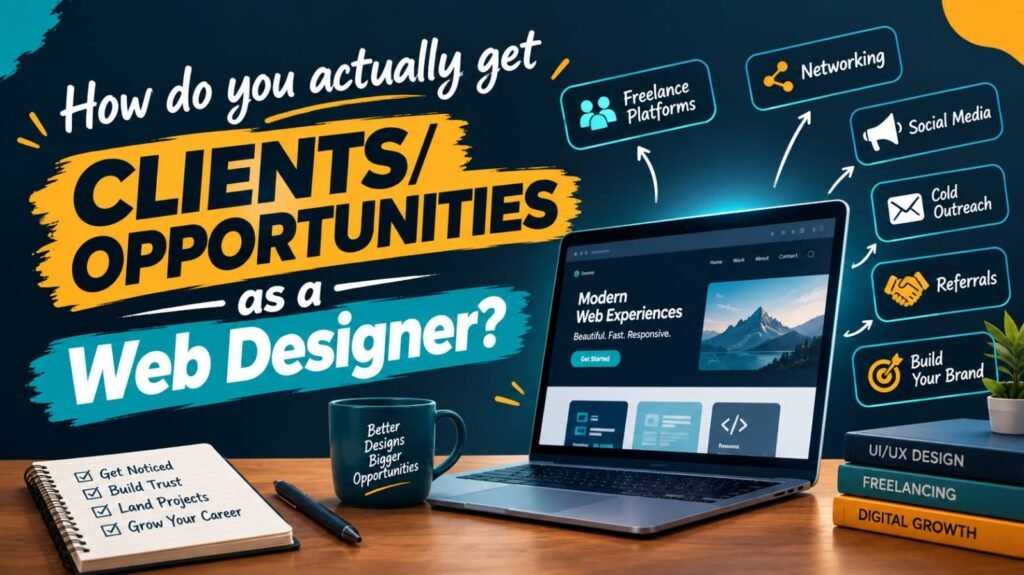
How Do You Actually Get Clients as a Web Designer in Kerala?
How Do You Actually Get Clients as a Web Designer in Kerala? Every web designer starts the same way — excited about the craft, confident in the skills, and then completely stuck on one question nobody really teaches you: where do the actual clients come from? You can be brilliant at building fast, clean, beautiful websites, but if nobody knows you exist, that skill sits unused. Let’s talk honestly about what actually brings in work, especially for designers working in and around Kerala’s business community. Stop Waiting for a Perfect Portfolio A lot of new designers get stuck in an endless loop — “I’ll start reaching out once my portfolio looks better.” Meanwhile, months pass, and the portfolio never quite feels ready. Here’s the truth: a portfolio full of pretty mockups for imaginary brands convinces nobody. What convinces a client is proof that you solve real problems for real businesses. If you don’t have paid work yet, find one or two local businesses — a small bakery, a homestay, a tailoring shop — with a genuinely outdated website, and offer to redesign it for free or at a steep discount, purely to build a real before-and-after case. A business owner in Kottayam running a fifteen-year-old website that looks broken on mobile is far more valuable to your career right now than another polished template project nobody actually needs. Go Straight to the Businesses With Bad Websites This is, without question, one of the highest-converting things a web designer can do, and almost nobody does it consistently. Spend an evening searching local businesses in your area — restaurants, clinics, shops, service providers — and note down the ones with slow, outdated, or completely broken mobile experiences. Then reach out, but be specific. A vague message like “Hi, I’m a web designer, interested in working together?” gets ignored every time. Something like “I noticed your site takes almost ten seconds to load on mobile, and that’s likely costing you customers who give up before it even opens — here’s what I’d fix” gets replies, because it shows you actually looked, and you’re offering to solve a real, named problem rather than pitching a generic service. Let Your First Few Clients Do the Talking Once you’ve completed two or three solid projects, don’t just move on quietly to the next one. Actively ask those clients for introductions — to other business owners they know, vendors they work with, even family members running their own shops. Kerala’s business community, especially outside the big cities, is tightly connected. One genuinely happy client can open three or four more doors just through a casual mention at a business gathering or a family function. The trick is asking at the right moment — right after the client has expressed satisfaction, not weeks later through an awkward follow-up message. A simple “if you know anyone else who could use something similar, I’d really appreciate the introduction” said at the right time does more than any cold outreach campaign. Pick a Lane Instead of Being Generic “Web designer” is a crowded, forgettable label. Being known specifically as the person who builds sites for ayurvedic clinics, or handloom and textile sellers, or homestays in the hill districts, changes everything. It lets you speak the specific language of that industry, reuse what you’ve learned project after project, and become the obvious recommendation whenever someone in that niche needs a website. Niching down also makes referrals dramatically easier. A vague “web designer” is hard to recommend to anyone specific. A “web designer who specializes in tourism and homestay websites” gets recommended instantly the moment someone in that circle mentions needing a new site. Use Freelance Platforms as a Stepping Stone, Not a Home Platforms like Upwork or Fiverr can genuinely help early on — mainly to collect your first handful of reviews and build a bit of credibility fast. But the pricing pressure on these platforms is brutal, and treating them as a long-term source of steady, well-paying work usually leads to frustration. Use them to get moving, then shift your energy toward direct relationships once you have a bit of proof behind you. Show Up Where Local Business Owners Actually Are Chamber of commerce meetups, local trade association events, even active WhatsApp groups for entrepreneurs in your district — these put you directly in front of decision-makers without competing against a hundred other freelancers on a search page. A five-minute conversation at a local business meetup, where you can actually explain what you do and ask questions about someone’s current website, often does more than weeks of cold messaging ever could. Build Relationships With People Who Already Have the Clients Marketing agencies, branding designers, and copywriters regularly need a reliable web designer to hand projects to, because building websites usually isn’t their core skill. A steady relationship with two or three such partners can quietly become one of your most consistent sources of work, without you having to chase anything yourself. This is also where it helps to understand the bigger picture beyond just design. A beautifully built website that nobody can find in search results, or that isn’t backed by any real marketing strategy, often underdelivers for the client — which reflects on you too, even if the design itself was flawless. Designers who take the time to understand how the best digital marketing expert in Kerala, India actually thinks about visibility, local SEO, and customer behaviour tend to build stronger, longer relationships with clients, because they’re not just handing over a website — they’re helping the business actually get found and get results from it. Play the Long Game With Visibility Too Sharing your actual process on LinkedIn or Instagram — real before-and-afters, small lessons from projects, honest thoughts on what makes a website actually convert — builds credibility steadily over months. It rarely brings instant leads, but it compounds. A year of consistent, honest sharing puts you in a completely different position than starting from zero […]